

How To Draw A Pile Of Bones
Draw accurate bones and muscle
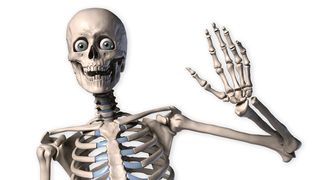
Beefcake is a huge subject and requires a blend of scientific information and creative practicality. For example, you need an engineering-like understanding of how the skeletal joints work to construct your figures. But if you don't know how to depict well enough to get a expert gesture, no technical understanding of the joints is going to salvage yous from awkward-looking move.
Too many artists get stuck on 1 side or the other: either having a complete agreement of medical anatomy, but being unable to describe a convincing- looking bicep. Or having enough effigy-drawing experience to be able to fake the form, but not really understanding what they're doing and inevitably cartoon something physically impossible.
Yet when everything is in remainder, anatomy is magic, and information technology enables you to create a man figure in whatsoever pose you want without reference. I'll do my best to get you started in this workshop, with an introduction to the skeleton and muscle physiology besides equally a few specific hints and tips on depicting the torso muscles. For more information, encounter our posts on how to draw muscles, and how to draw an arm.
01. Report the skeleton
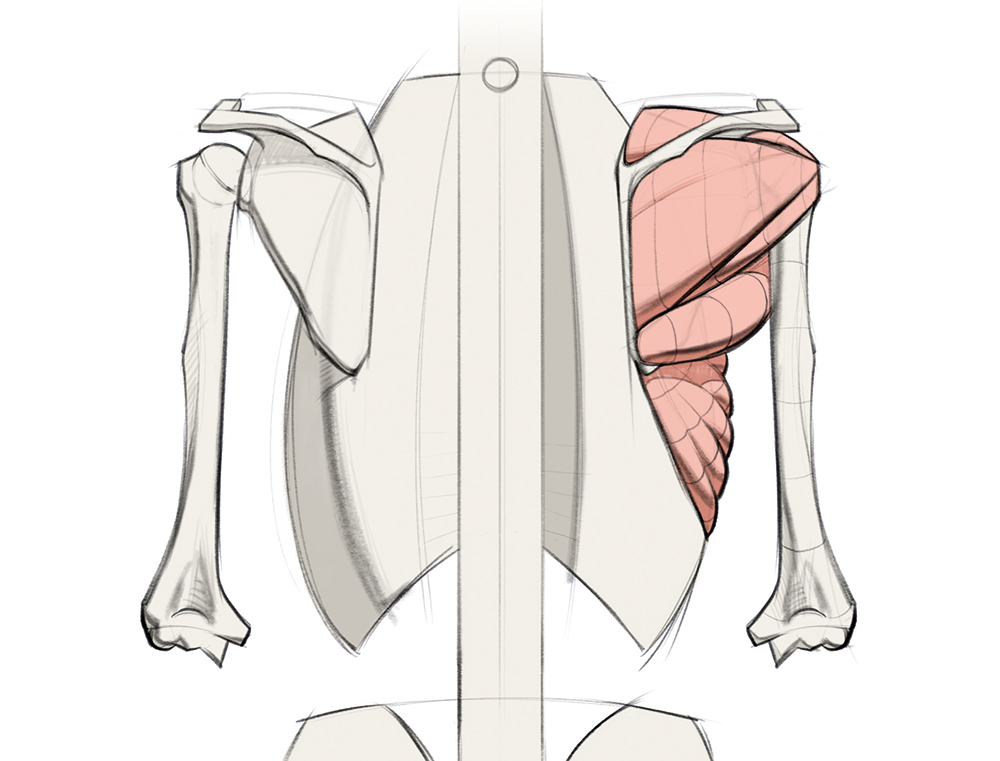
Bones are the foundation of the body. Muscle and fat, in dissimilarity, can vary wildly from person to person and even throughout a lifetime. The skeleton, however, is much more reliable. Understanding it is vital for knowing where to attach muscles, and also helps with proportion. For instance, the rib muzzle will always be as deep as the head is tall, no thing how much fat or muscle there is on top.
02. Utilise the bony landmarks

To help place the placement of the skeleton, look for the bony landmarks. These are key spots on the body where the bones are superficial, with no muscle or fat blocking them from the surface of the pare, and include your collarbones, elbows and the back of your spine. They're more than trustworthy than peel-based landmarks like the omphalos, considering skin can sag and stretch. Trust me, the bony landmarks are your new best friend.
03. Giving yourself a headstart
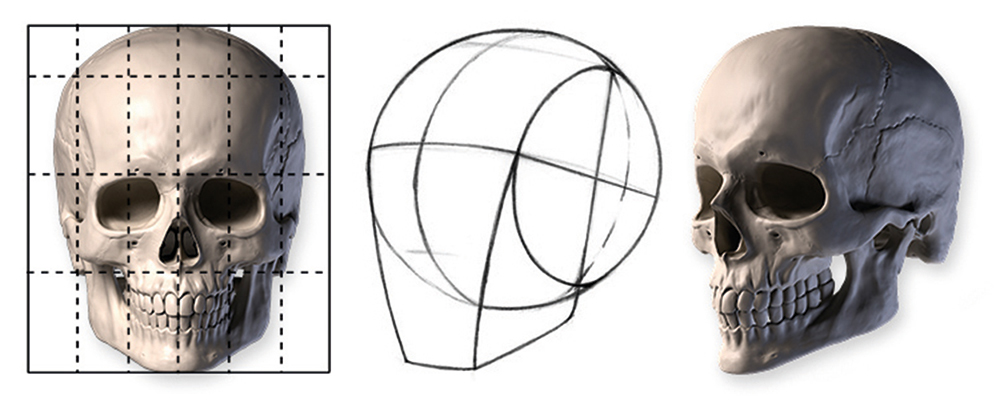
In that location are three principal masses that determine the balance of the human body: the head, the rib cage and the pelvis. The spine connects these, and connects to the arms and legs. Nosotros need a potent understanding of these forms and then we can invent them from any angle, which ways simplifying them down to a manageable structure. For the caput, that's a sphere for the cranium and a cake for the jaw.
04. Depicting the rib cage
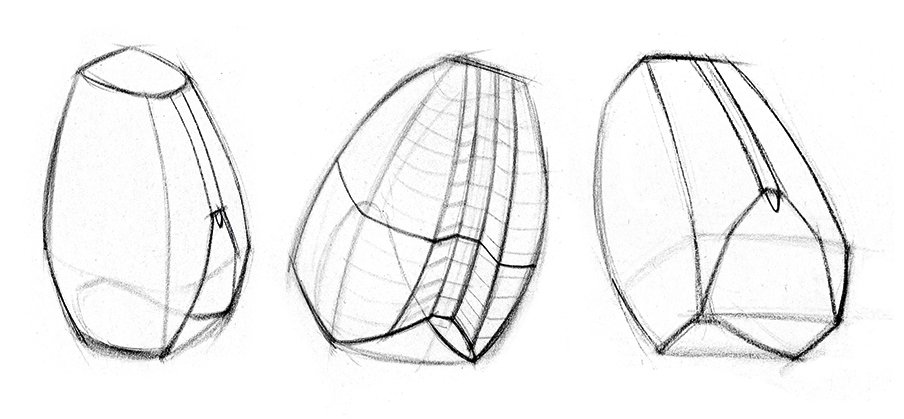
Simply speaking, the rib cage is egg-similar, but we can do ameliorate than that. Information technology has about the aforementioned depth as the head, but information technology's one-and-a-half caput heights tall and 1-and- a-quarter broad. It's thinnest near the neck and reaches its widest indicate about 2-thirds down. In one case you take the major proportions established, you can place the cease of the sternum halfway down the rib cage, and construct the thoracic curvation below information technology. Don't forget to define the edge betwixt the front plane and side airplane of the rib muzzle.
05. How to simplify the pelvis
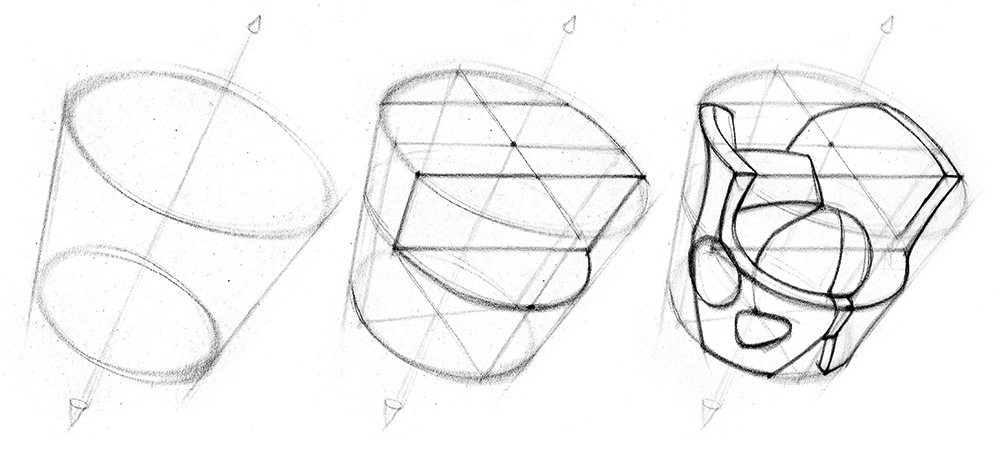
Okay, this 1 looks complicated, I know, but that makes simplifying all the more important. On a guy, it'southward roughly the same width as the rib cage and near as tall equally the head. The female pelvis is wider and shorter. Keeping those proportions in listen, the pelvis is essentially a saucepan. Have out a wedge from the forepart of the bucket to define the pubic symphysis and the front of the iliac crest. You tin keep to shave sections off piece past piece to clear a perfect pelvis.
06. How to master muscles
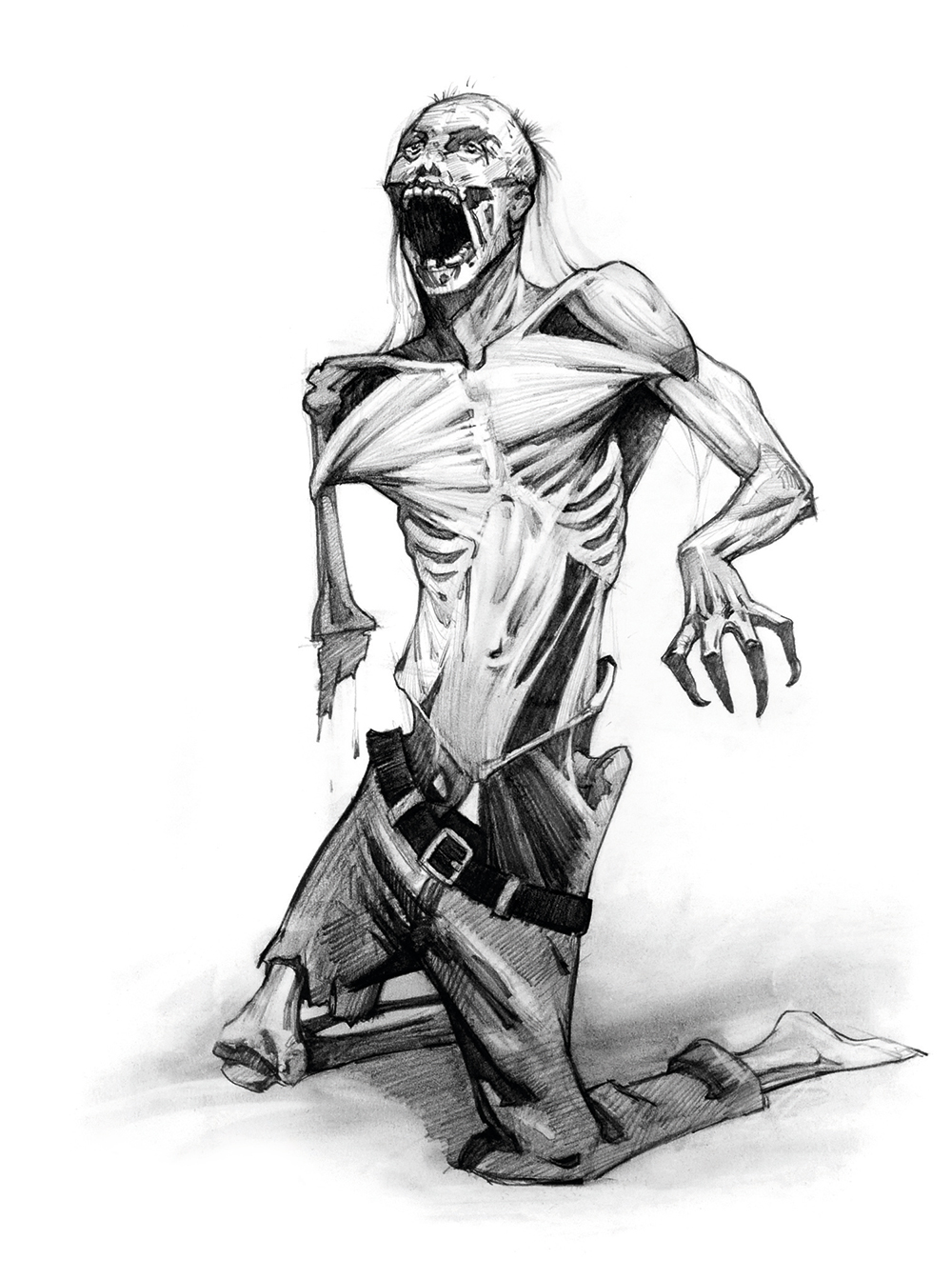
To master a musculus, yous should study its origin, insertion, function, adversary and form. The origin is where the muscle attaches on the more than primal or stationary part of the body, and the insertion is the attachment on the outer or more than movable function of the trunk. When the muscle contracts, it pulls the insertion closer to the origin. The most important aspect to study is the form. When you understand muscle in three dimensions (including its major planes changes and where it'due south the thinnest and thickest) yous'll be able to draw it from whatsoever bending, and nether any lighting conditions.
07. Learn the functions
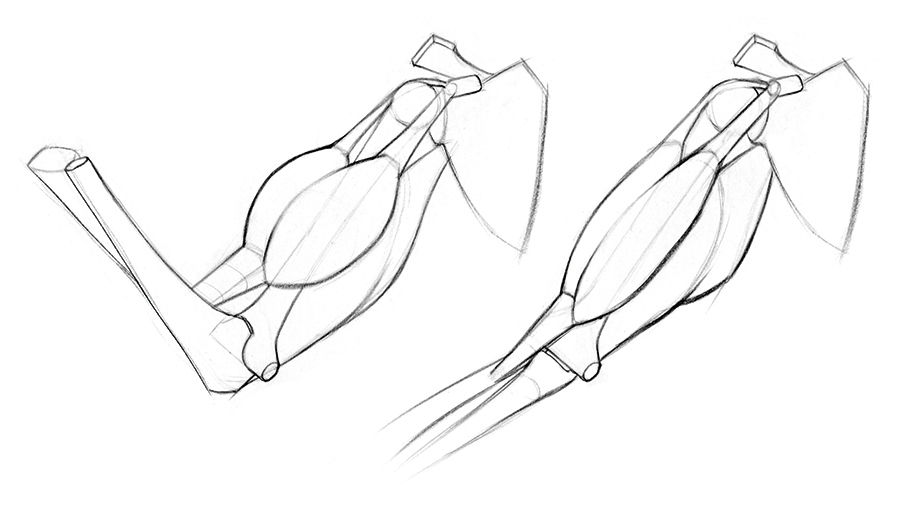
As you already know, muscles contract to pull the insertion closer to the origin. They aren't capable of relaxing by themselves, and so they need an antagonist to pull in the reverse direction and stretch them back out. The bicep bends the arm (flexion), and the tricep straightens the arm (extension). Understanding muscles' functions helps you describe a natural-looking figure by flexing and relaxing the muscles appropriately for that pose. Avoid the constipated bodybuilder look.
08. How to define the musculus groups
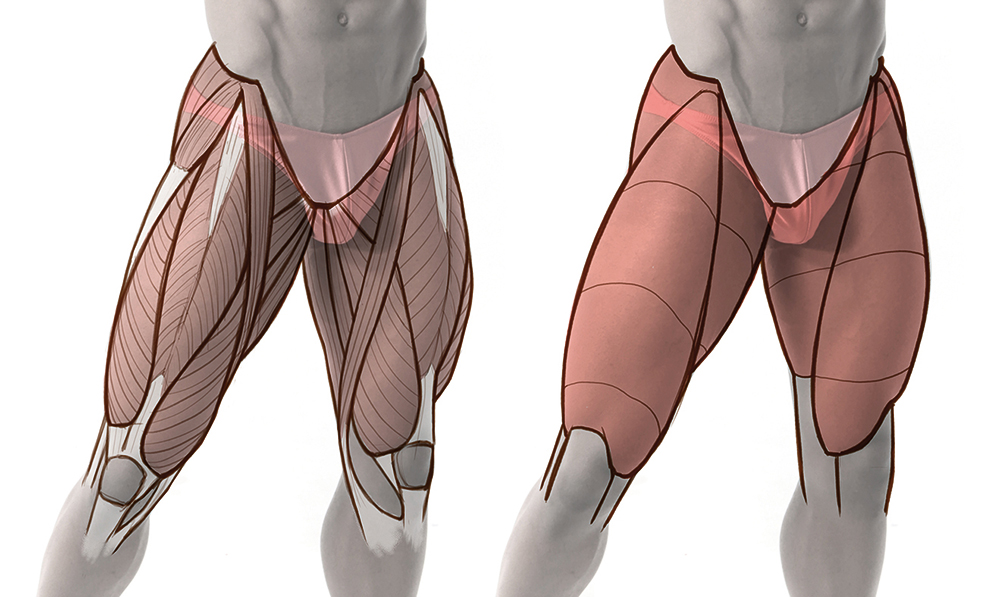
Neighbouring muscles with similar functions can be grouped together. When the muscles are flexed they'll popular out and be individually distinct. But if they're relaxed at the aforementioned time, they'll blend into i large, smooth form. For example, the quads of the leg (rectus femoris, vastus lateralis, vastus intermedius and vastus medialis) tin can exist grouped together into ane form. Apply these opportunities for simplifying anatomy to create a rest of active and passive areas in your drawings.
09. Muscle fibres and tendons
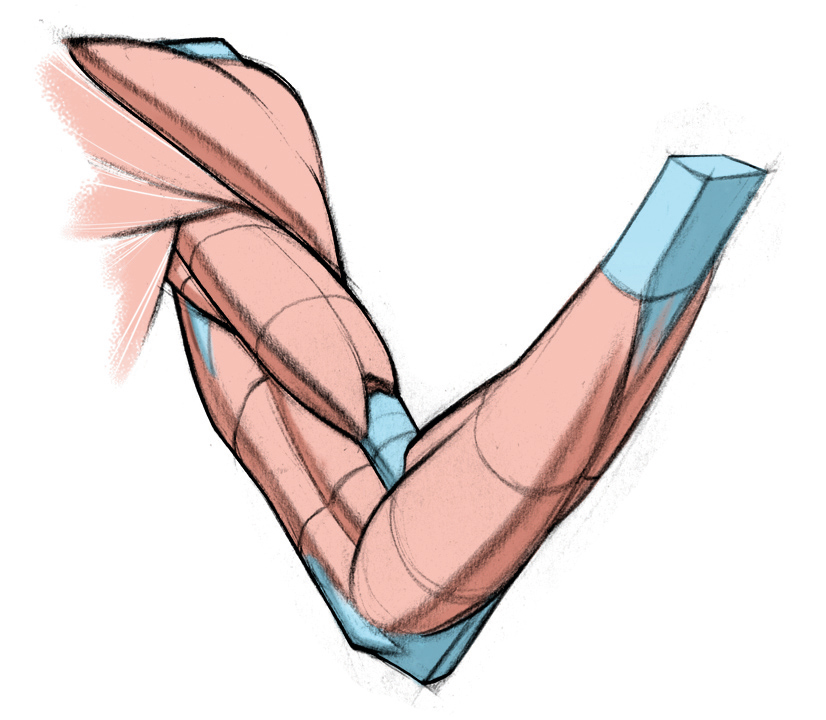
Let's take a pace back and wait at what makes up a muscle. The red muscle fibre is what shortens when the musculus is flexed. It doesn't directly attach to the bone, but rather, information technology attaches to a middleman material called a tendon. Tendons tin can't shorten or stretch like muscles can. They simply tape muscle to os. When the muscle fibres are contracted and bulging, the tendon volition ofttimes announced as apartment depression or furrow.
10. Long versus short muscles
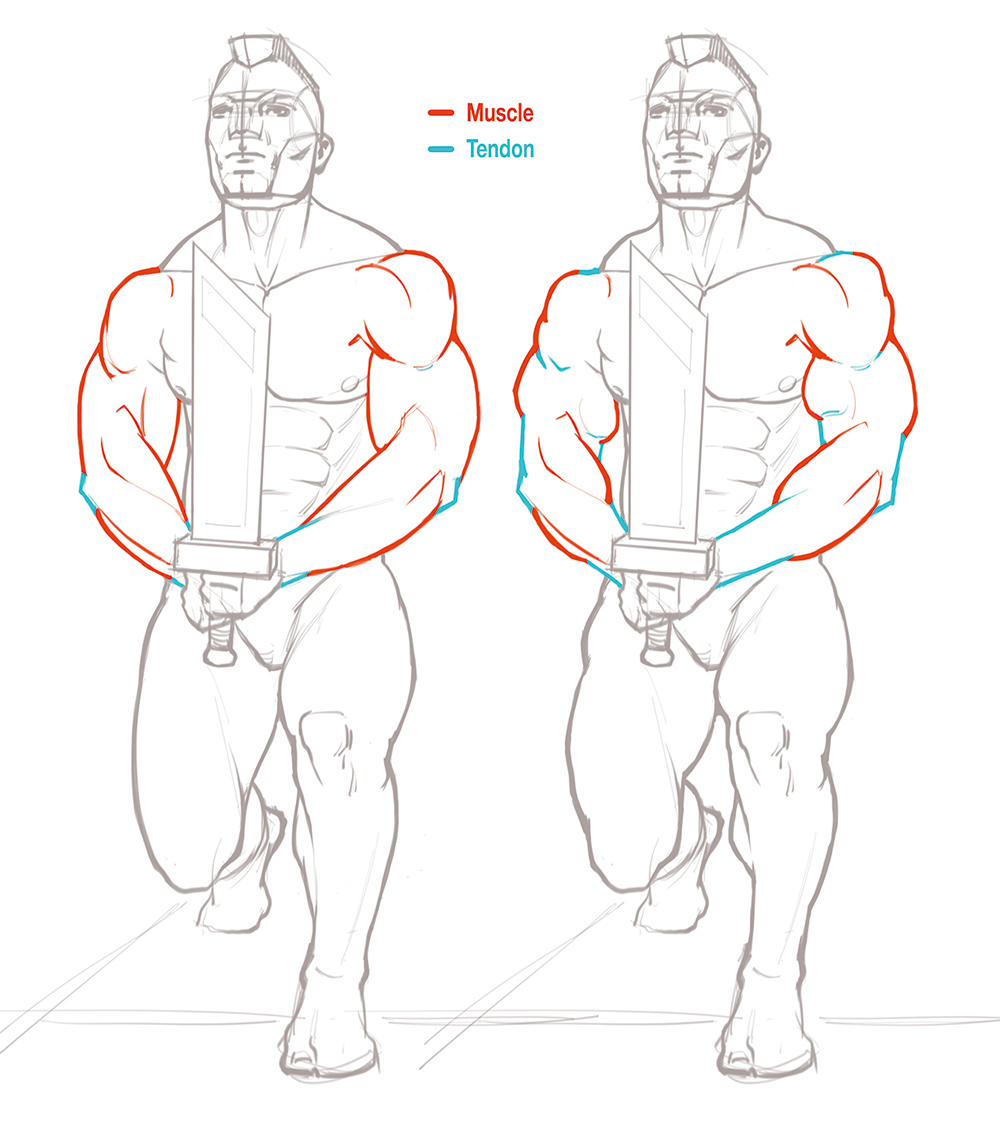
People are born with different lengths of muscle versus tendon. Information technology's a subtle difference that will affect how long and elegant, or sharp and athwart, their muscles wait. With long muscles, when the muscle is flexed, it volition appear smooth and graceful. Long tendons means there'due south less room for the muscle. They'll accept a sudden start and end, actualization like mountain ranges. Compare dissimilar bodybuilders to run across this effect in action.
eleven. Anatomy tracing and invention
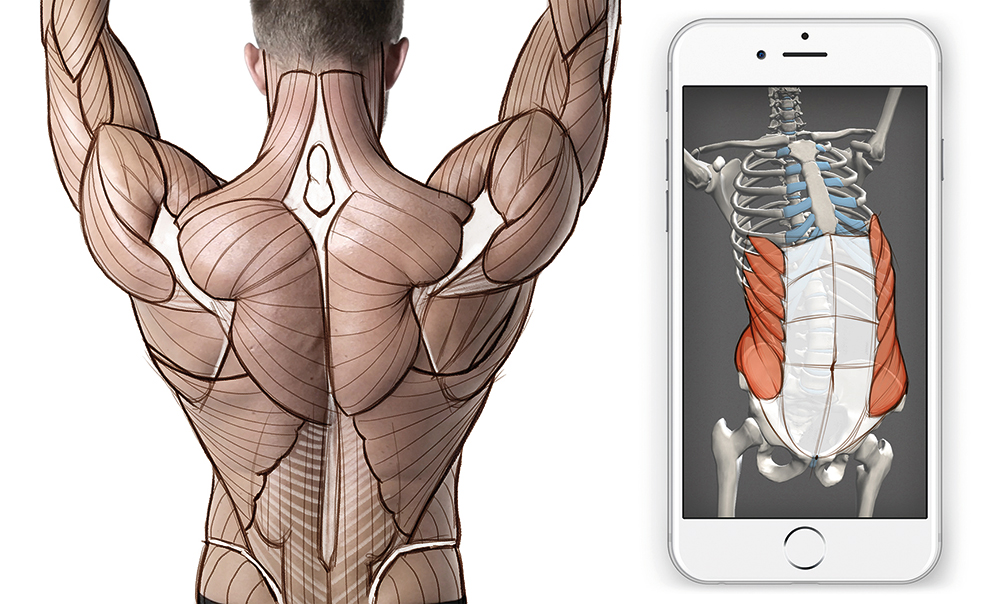
Set to exercise muscles? A swell practice is chosen anatomy tracing, where you nautical chart the muscles on top of a photo reference. It's a little easier for beginners because you don't have to juggle many drawing factors at once and tin can focus on recognising and accurately placing muscles. When you go comfortable with that, crank it up a notch and invent the muscles from your imagination on pinnacle of a skeleton reference. You can draw the skeleton yourself, or employ the mobile app Skelly, a poseable anatomy model, to speedily pose an accurate reference to draw on.
12. Understanding the pectoralis major

Let'due south acquire a muscle. The pectoralis major's class is akin to a flat box, tucked into the corner of the collarbones and sternum. Its iii distinct portions (the clavicular, sternal and intestinal) overlap each other in a folding fan pattern, and twist over each other where the muscle pulls from the rib cage to insert on the arm. When the pecs flex, its muscular bundles get easy to see on the surface form. Fat gathers on top of the pecs along the outer-bottom corner in a crescent shape, and gives the pecs a distinct edge.
13. Think of breasts like water balloons
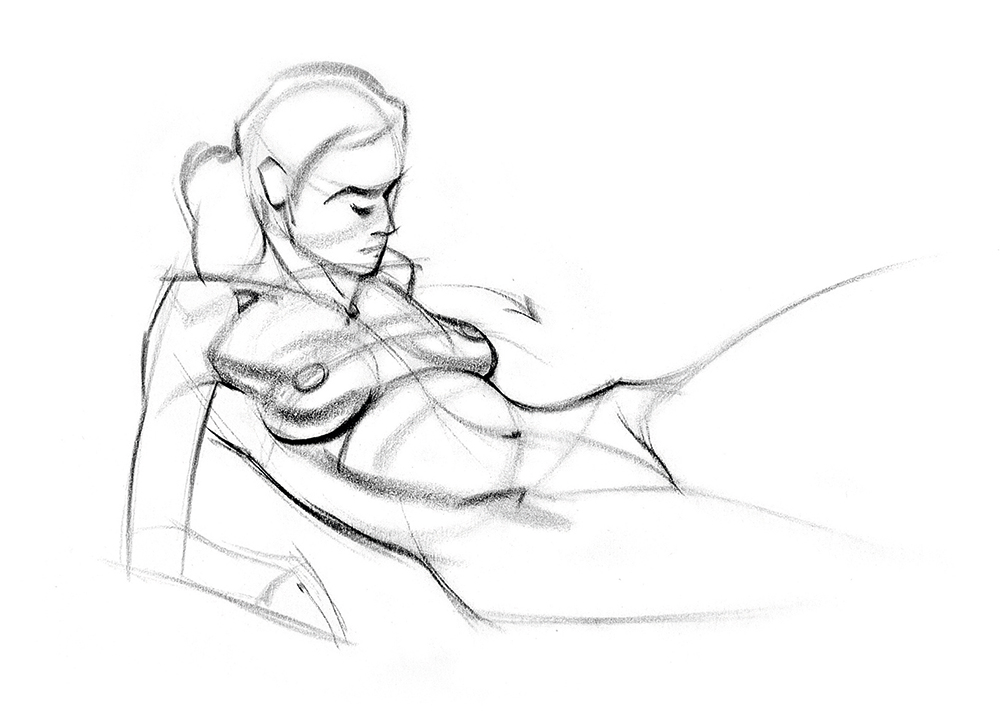
Call up of the breasts as water balloons rather than spheres. Testify gravity in your drawings by letting the breasts hang or wrap effectually the rib cage, depending on the pose. Keep in mind that the pectoralis major lies underneath. The pecs are easy to see where the breast tissue thins, on the upper chest and near the armpits. If the pecs are flexed, you'll see pec bundles, even on non-muscular women.
fourteen. Putting some back into information technology
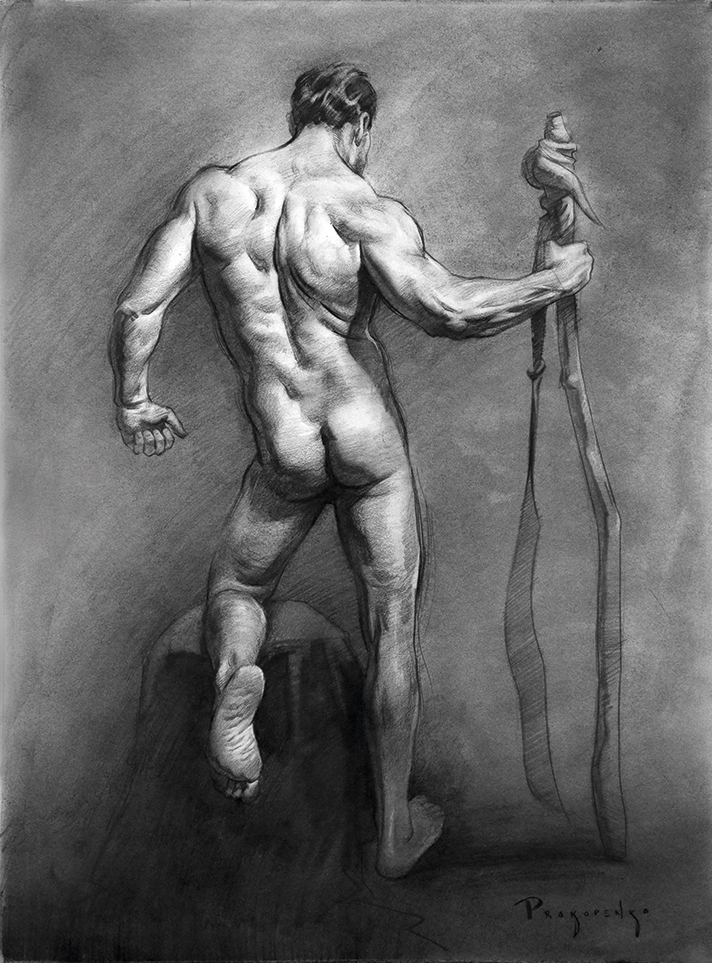
The upper back is an intimidating expanse. You take numerous shoulder muscles to learn to draw, going from the shoulder blade to the armpit, creating a bunch of sparse tube-similar forms. The shoulder has the widest range of motion of any joint in your torso and information technology needs all those pocket-sized muscles for that. The big masses of the back are the trapezius along the neck and upper back, erector spinae, which follows the length of the spine, and latissimus dorsi, which gives the body that V-shape.
15. Determine on how much fat and how much muscle?

Accept y'all always seen a skinny guy with a six-pack? Or have you e'er spotted a very strong wrestler with a bit of a belly on him? I certainly have. Fatty develops on meridian of muscle. Fifty-fifty a sparse layer of fat will polish over muscular definition and soften the class. Trunk types are not a matter of fat or muscular, simply "how much fat?" and "how much muscle?" Using those two factors together, you can create a variety of trunk types for a range of characters.
This article was originally published in ImagineFX magazine upshot 135. Buy it here .
Related manufactures

Source: https://www.creativebloq.com/how-to/draw-accurate-bones-and-muscle
Posted by: oconnellfrawing1956.blogspot.com
0 Response to "How To Draw A Pile Of Bones"
Post a Comment