

How To Draw Details On Round Surfaces
Fundamentals:
- Cylinder: Curved Surface
- Cube (flat)
- Brawl
Advanced:
- Drawing dull, worn metal
-
- Creating a not-shiny metal surface
- Adding rust
- Let's Practice: Fantasy Helmet
- Modify your metal type with a gradient map!
-
- What is a gradient map?
- Changing the colour of the medallions
Fundamentals: Drawing the basic shapes
Let's get-go by painting metallic onto a uncomplicated shape. The examples in this tutorial are created with Clip Studio Paint and Photoshop. The steps and basic functions used tin can be repeated in about drawing software.
1. Cylinder: Curved Surface
Curved surfaces, like those found on a cylinder, are the most likely to bear witness the characteristics of metal and theeasiest shape to paint a metallic surface onto. Even unproblematic painting methods such as cel-shading can be used to evoke metallic effects, so we'll start by reviewing this relatively simple painting method first.
Commencement, paint the curved surface with the base of operations color of the metal. For this example, I imagined steel, and so I used greyness. Make separate layers for both the side and the top, and so it's easier to paint shadows and highlights subsequently on.
In the image below, the colour of the acme has been changed to ruby-red to make viewing each of the sides easier.
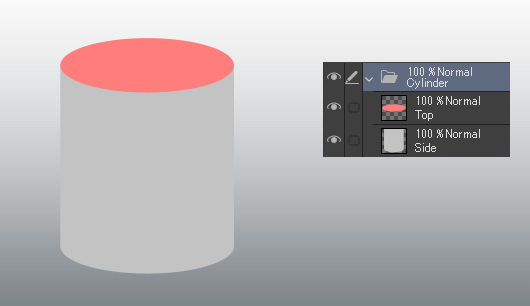
Let's pigment the sides now.
Create a new layer to use for the first layer of shadows and apply a somewhat darker color than the base of operations color to the sides of the cylinder, equally in the image below. Prune the layer to the base of operations layer so that the painted shadows do not beetle by the painting on the base of operations layer. Make sure your lines are parallel to the sides of the cylinder. If it is tilted, tilt the shadows appropriately. In this case, the light source is on the upper left side.
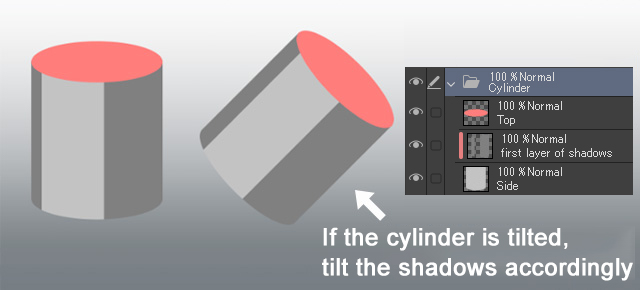
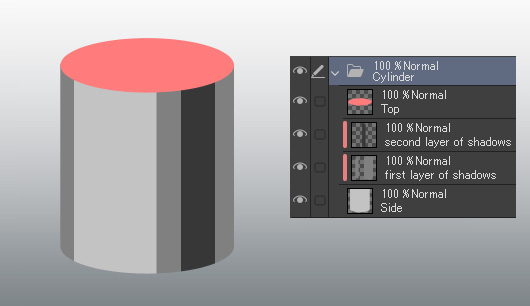
Side by side, create a 2nd shadow layer and paint another shadow with a darker color, as in the epitome below.
Adjacent, create a highlight layer and paint a highlight in white from the direction of the light source. Also, pigment highlights on the edges of both sides in addition to the highlight from the straight lite source. These represent ambient reflection from the environment.
Equally there is now a stardom between the top and the side surfaces of the cylinder, we inverse the elevation from red to the same gray that was used for the base color of the metal.
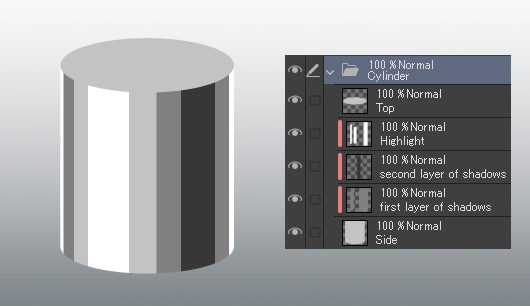
For the terminal step, add a blurred highlight to arrive look more than metallic.
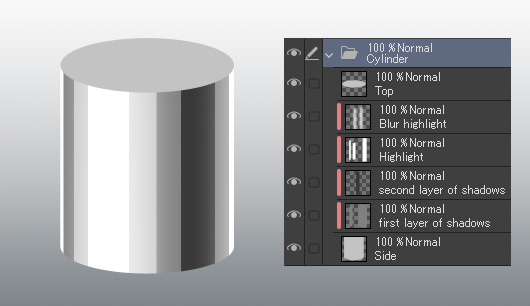
With that, the cel-shading painting procedure of a curved surface is now complete. Next, we will review how to paint a flat surface for the top flat role of the cylinder.
The above painting method is simple but effective in creating a metallic appearance on a curved surface . Although processes for painting metallic in anime sometimes differ due to the employ of software such as AfterEffects, this is a similar cease to how metal armor and other items on anime characters look. That beingness said, this method is still a scrap bare-bones, so let's take a wait at a slightly more elaborate metal painting method for the top role of the cylinder.
To achieve that game analogy feeling, nosotros should blur the shadows and highlights. If we blur them farther away from the light source, rather than blurring them overall, information technology volition make the surface announced fifty-fifty more metal.
For an oil painting effect, use a tool like to the watercolor brush that leaves thick brushstrokes behind in the artwork.
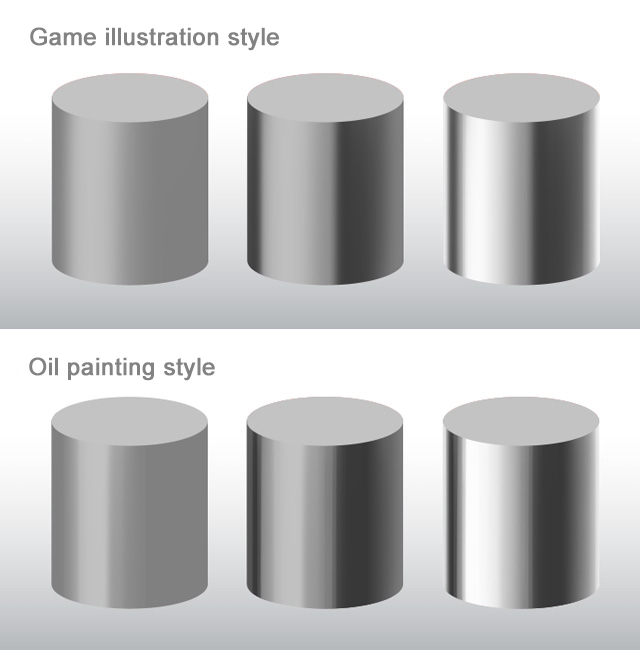
And then, the main points when drawing a curved surface similar a cylinder can be summarized as follows:
- Paint shadows and highlights parallel to the sides of the cylinder
- Add together highlights to the edges to show the ambient light from the surroundings
- As you paint in shadows farther abroad from the main light source, blur them for maximum event
We can take this method and employ it on objects other than cylinders such as rings, bracelets, bondage, etc. Permit's employ what we have learned so far to other shapes such every bit rings and bracelets. Afterwards all, these are really just short cylindrical objects.
Paint the shadows and highlights on the inner and outer face up of the band parallel to its sides.
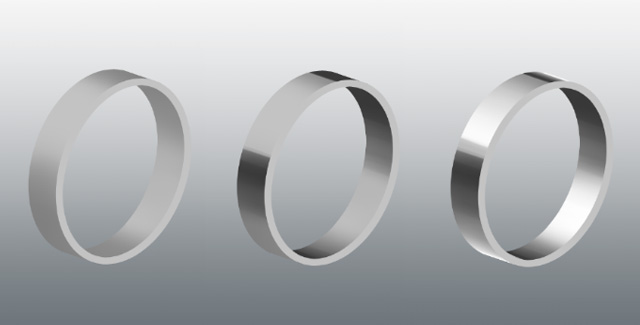
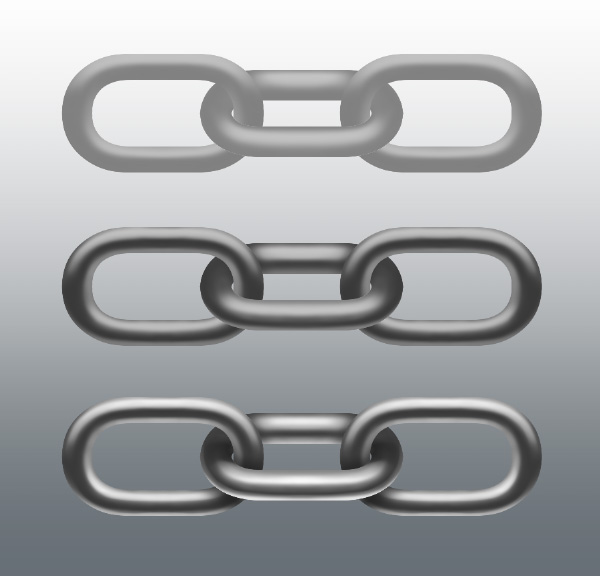
Like a cylinder, chains are as well bent and curved. However, information technology is different than the round surface of the ring so calorie-free besides hits it differently. Pay close attention to the direction of the shadows and highlights.
ii. Cube (flat)
Next, allow's pigment a cube. Previously, we looked at painting a curved surface; at present, we will look at how to pigment a metallic result on a flat plane. First, but similar with the curved surface, pigment the base grey. Again, to make it easier to paint shadows and highlights on each side, the top side is on a separate layer. In the effigy beneath, the color of the top has been changed to red for ease of understanding.
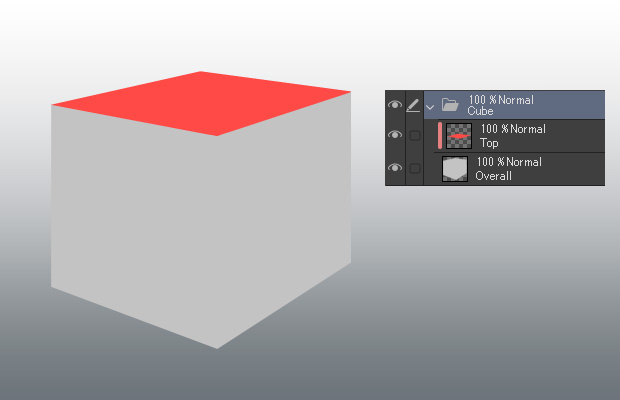
Create a shadow layer for each face of the cube and pigment in the shadows like in the prototype below. Setting a layer mask for each face makes it easier to paint them. For cubes, painting them with an anime style is unexpectedly tricky, so nosotros will paint them in a video game-like mode instead. The light source is on the upper left, like with the cylinder.
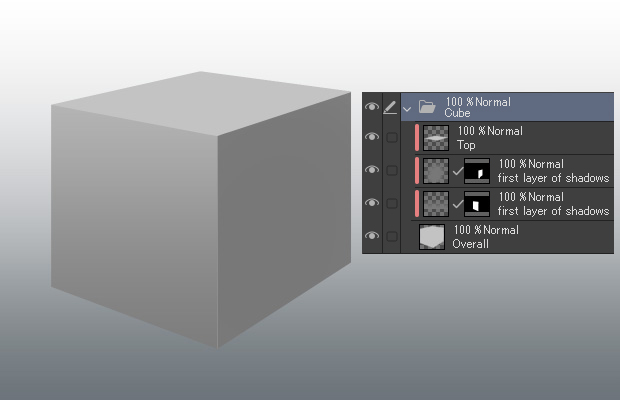
Next, pigment in a darker shadow. Call back non to brand the tiptop and left sides likewise nighttime considering the light source is on the peak left. And then, create a second shadow layer for the right side of the cube and shade it in with an even darker color. Leave the bottom of the right side slightly brighter to stand for the reflection coming upwards from the footing.
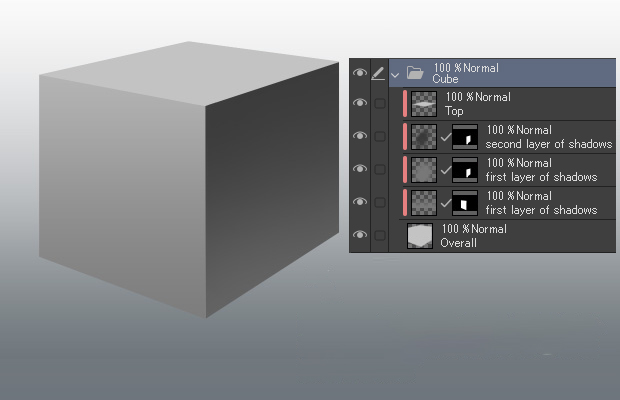
Add together potent highlights to the edges and corners of the surface. This helps achieve a metallic look.
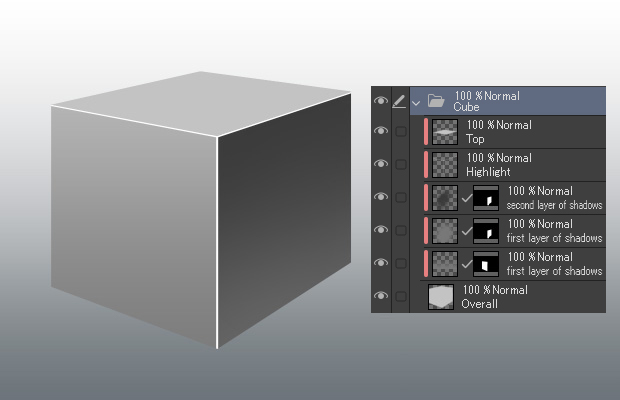
Finally, add together some soft, blurred highlights, every bit in the epitome below. Over again, draw highlights that are reflections from the environment. In this case, paint them up from the basis. This is a useful technique for expressing a metallic surface. Increasing dissimilarity between adjacent surfaces too gives it a more metal appearance.
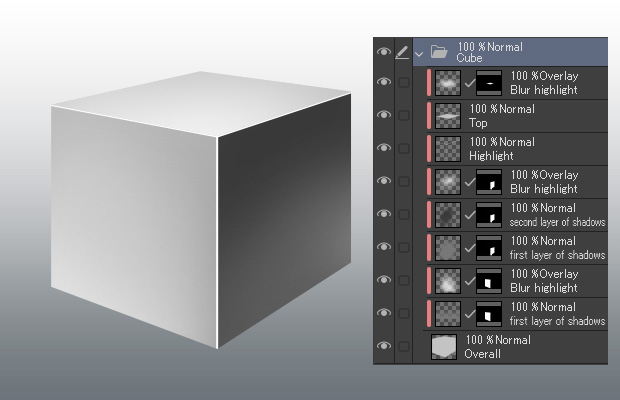
Our cube is at present complete. When using this method on a flat surface, it tin often terminate upwardly looking plastic instead of metallic or but altogether unconvincing. The same applies when painting cubes with an anime-fashion. Then, permit's push the painting a little further to solidify the metallic finish on our cube.
Metal reflects its environment like a mirror. Past cartoon in reflections, you can limited this quality of the metal. Reflections are challenging to draw. How sharply the surrounding objects are reflected depends on the processing of the metal. If y'all draw them in besides sharp, it will look like the object is floating over the cube rather than being a reflection.
If what is being reflected isn't an essential part of the analogy, it'due south better to draw in simple reflections instead.
For planes, it's best to add these kinds of reflections to the plane that has faint highlights and shadows along its surface. Here, but the highlights are added. Furthermore, reflecting surrounding objects too means reflecting the color of those objects. A useful technique is to lightly reflect those colors off of the surface closest to them.
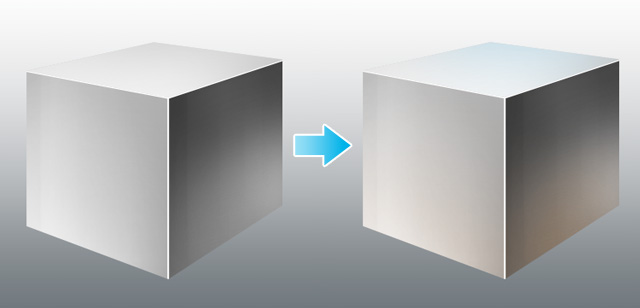
To sum upwardly drawing planes:
- Strong highlights on the edges and corners of the surface
- Increasing contrast of low-cal and dark between adjacent surfaces also gives it a stronger metallic appearance
- Create reflections of surrounding objects by lightly calculation shadow on the surface
- Add together colour to express the reflection of color from surrounding objects
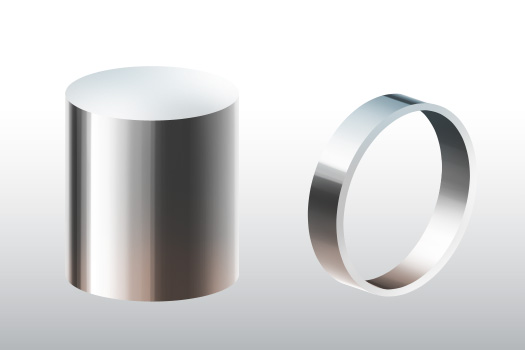
This is the completed result of applying this final role to a cylinder or ring.
3. Ball
Finally, allow's draw a sphere. It is quite challenging to properly limited the reflections of a sphere, then for this tutorial, we volition just paint a simple version instead. Moreover, the sphere doesn't have multiple sides like a cylinder or a cube, which further simplifies the process.
Start, pigment the sphere normally. And so, add a subtle highlight on the lesser of the sphere to requite it a more metal appearance.
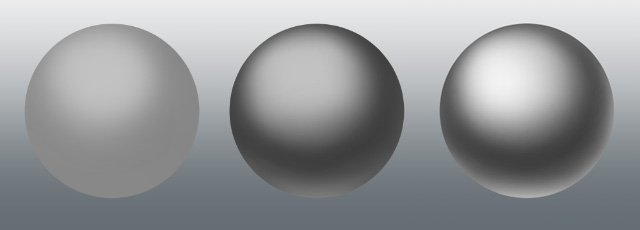
For a unproblematic sphere, yous can stop here. You can take information technology a step further by adding the reflection of the surrounding colors every bit we did with the cube.
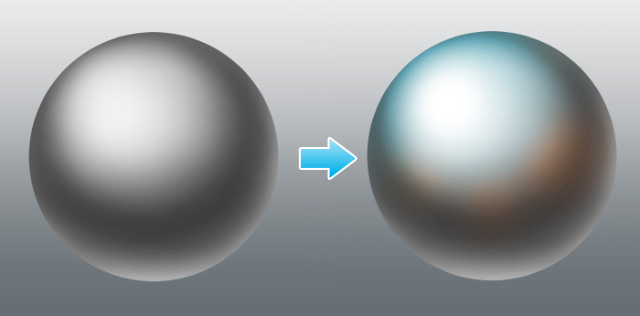
To farther heighten the reflection of light, either hide your outset layer of shadows or forgo it from the start, so at that place is an even sharper dissimilarity between lite and dark, making the sphere look even more than metallic.
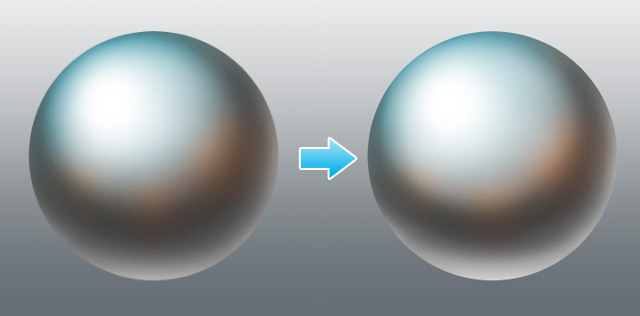
Y'all can even go a pace further andadd a highlight from another light source.
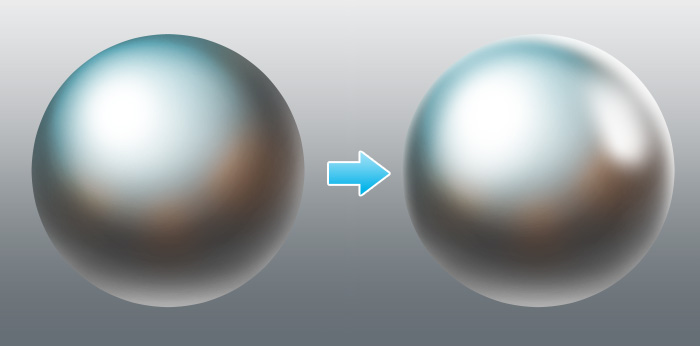
So the points when drawing a sphere are as follows.
- Add together a subtle highlight on the bottom of the sphere to give it a more than metallic appearance
- Express its metallic appearance by reflecting the colour of surrounding objects
- Sharpen the contrast between light and dark and add more lite sources
Drawing dull, worn metal
So far, we've simply looked at how to describe smooth, reflective metal surfaces, then now, allow's take a look at how to draw a boring metal surface.
Creating a non-shiny metal surface
Metal that is not shiny tin can exist easily expressed by using a texture included in your cartoon software.
one. Calculation a texture epitome
First, let's place a texture onto the canvas.
●For Photoshop
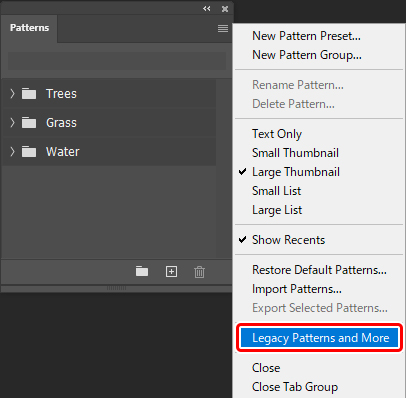
Select Window > Blueprint to open the Pattern panel.
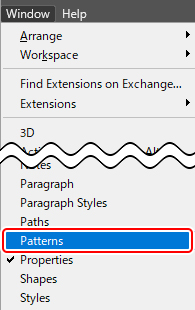
Click the carte du jour of the Pattern panel and select Legacy Patterns and More to load additional blueprint images.
Create a new layer and fill information technology with white. Select Layer Fashion > Pattern Overlay > Matte Texture to apply it to the layer. And so, open Layer Style > Design Overlay > Pattern and select the Texture grouping from Legacy Patterns and More group > Legacy Patterns group we just loaded.
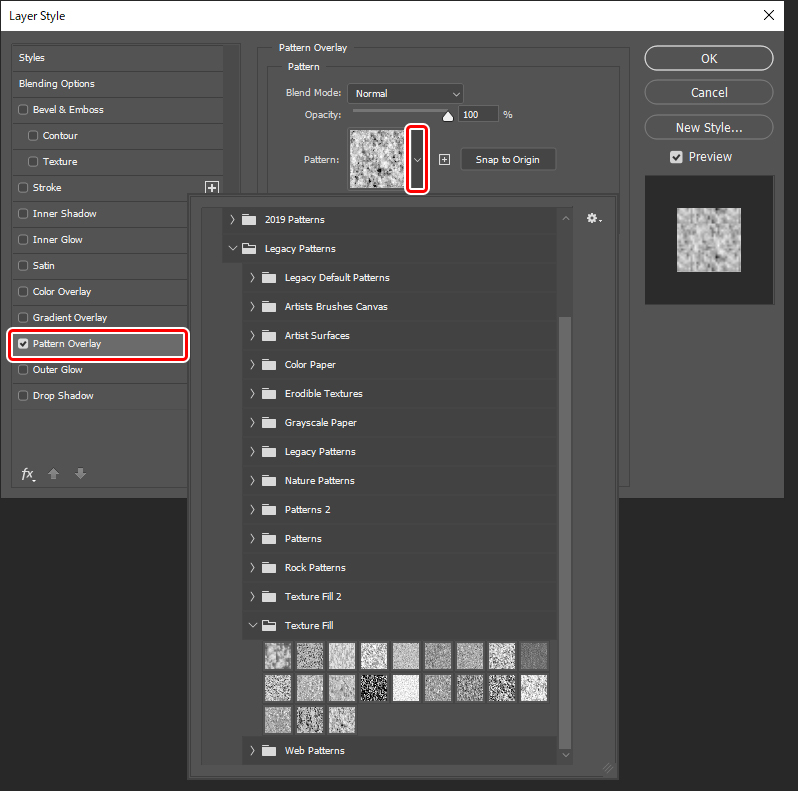
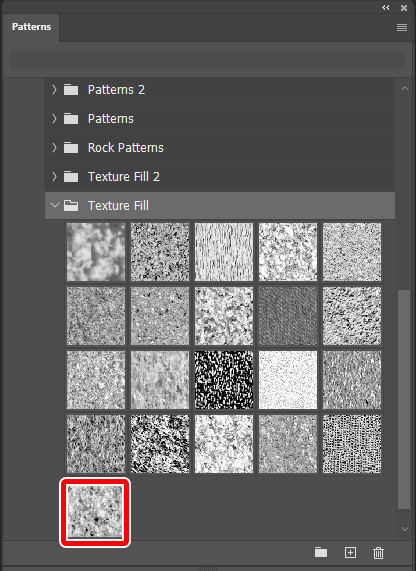
The Texture gear up is a set up that contains texture patterns for rocks and trees. The blueprint was created with the settings shown below.
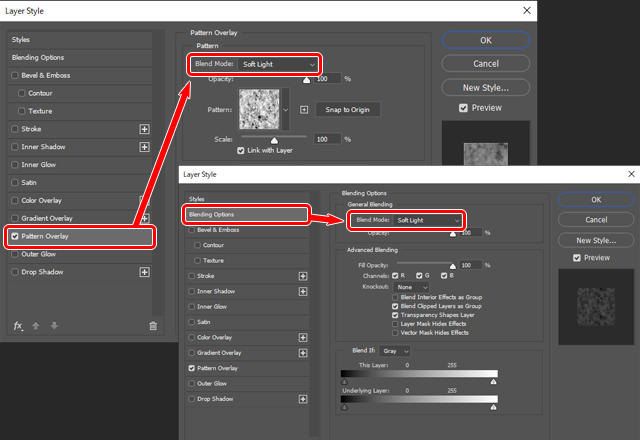
Set both the design overlay blending manner and the Layer furnishings blending mode (the layer console blending mode) to Soft calorie-free.
●For Clip Studio Pigment
Click onTexture fromTextile palette >Monochromatic pattern.
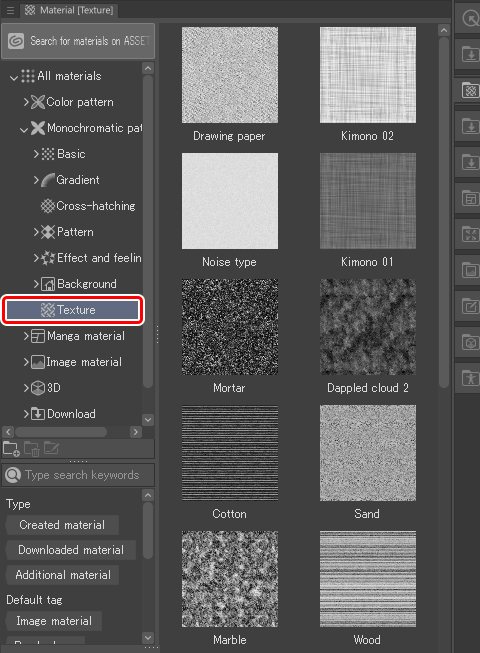
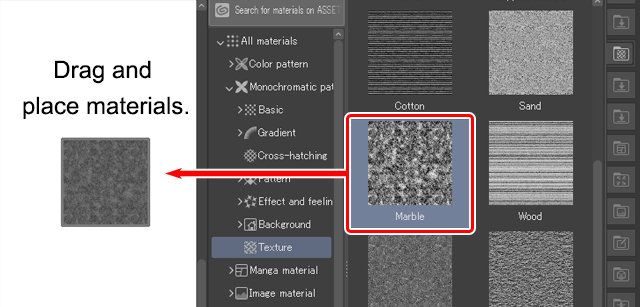
Elevate the desired texture paradigm from the cloth palette onto the canvas and set its blending way toSoft light. For the sake of this tutorial, I named the layer "Material texture."
ii. Prune the texture to the metal cube
From here, the process is the same for both software. Clip the "Material texture" layer to the layer showing the metal cube. In the example, the texture paradigm layer is clipped to a layer folder that contains all the layers of the metal cube. Then, reduce the opacity of the textile texture layer to about 10–30%, depending on how wearisome you want the metal to look.
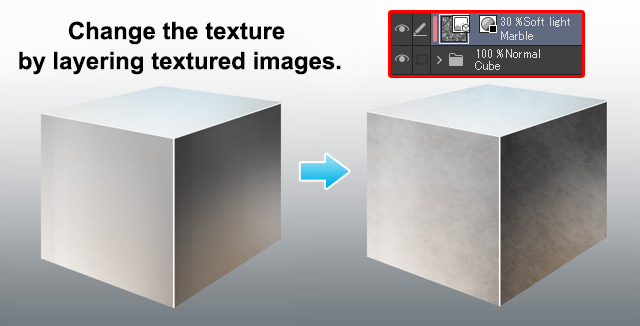
3. Finishing touches
At this phase, the metallic looks dull, just depending on the texture used, the pattern may look besides noticeable or too flat. In that example, add a layer mask to the "Material texture" layer, and erase any unnecessary parts with a brush that has a blurred edge. Finally, slightly reduce the opacity of the metal highlights. This reduces its polish. That completes our simple method of rendering a metal surface with a dull finish.
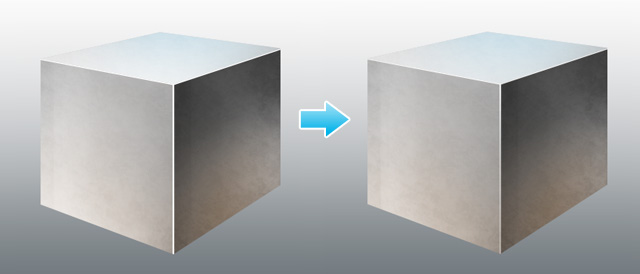
Adding rust
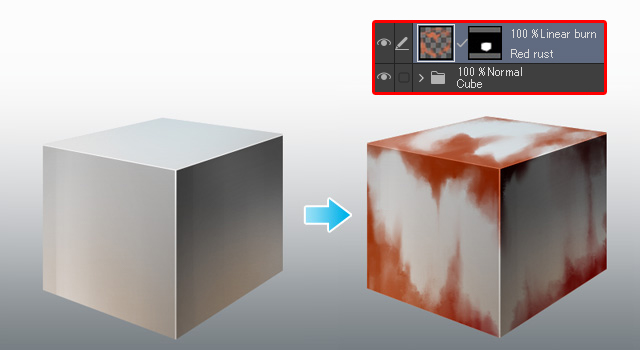
Metal rust is created past adding several dissimilar layers together. Let'southward add rust to a cube as an example.
First, add a layer for drawing rust on summit of the binder that contains the cube layers. We'll call it Ruddy rust. Adjacent, you tin can prune to the cube folder, only we want to create a clipping layer on the Red rust layer itself, so instead, nosotros will add together a layer mask in the shape of the cube in the folder. And so, draw some rust on the Red rust layer and set the layer's blending fashion to Linear burn to match the shade of the shadows on the cube. Depending on the hue of the metal, y'all may find that another blending mode suits the image improve.
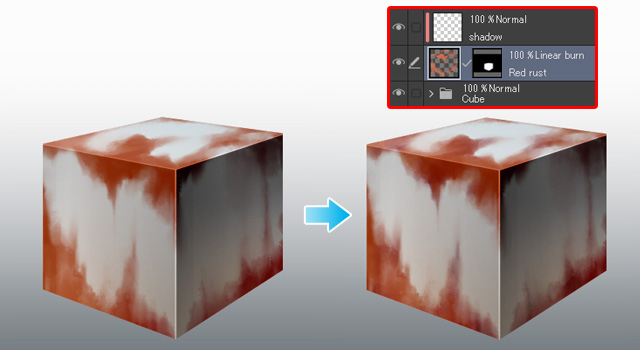
Next, create a layer and clip it to the "Ruddy rust" layer below and add some darker areas to the rust.
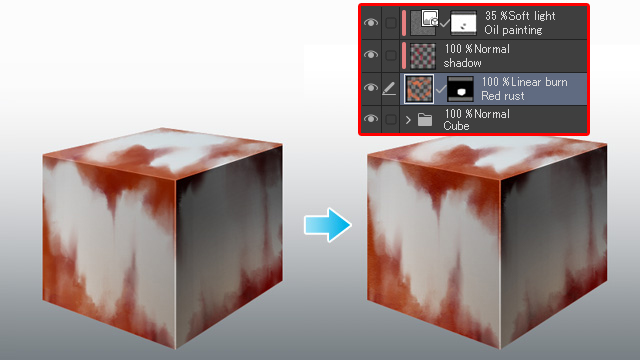
Finally, add a texture prototype to create the fine irregularities caused by erosion. I used the Oil paint texture from Clip Studio Paint. Change the blending fashion of the texture toSoft light and lower the opacity. If the texture blueprint is too noticeable, add a layer mask and adjust as needed. Our rusted metallic cube is at present consummate!
Allow's Practice: Fantasy Helmet
So, do you have the basics of painting metal down yet? Even with access to tutorials, information technology can be challenging to put these methods into practice. So let's employ these basic shapes to draw something circuitous.
I've drawn a medieval fantasy helmet that combines simple shapes. Commencement, I split each office into dissever base layers. We prepared the below image as a reference to show how we divided our base of operations layers, simply in that location is no trouble if you practice this pace on your own.
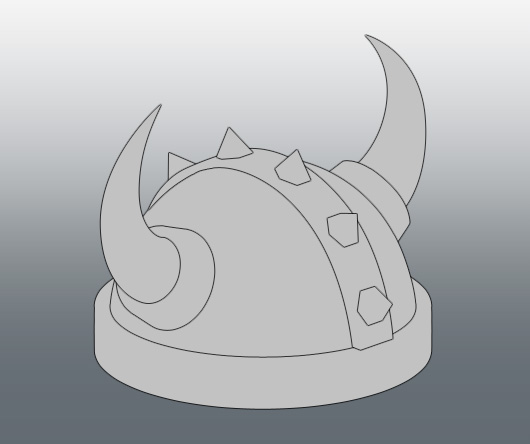
It may not expect like information technology at offset, but this complex shape is fabricated upwards of a combination of simple shapes we discussed earlier in the tutorial.
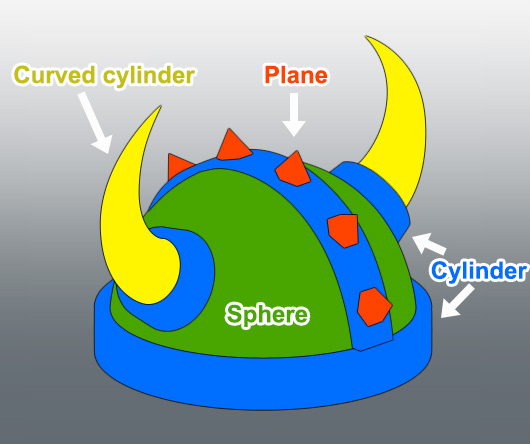
Starting time, allow'southward paint the part that covers the head, which occupies most of the helmet. You can use the sphere shape here.
For this example, there are two light sources, one on the upper left towards the dorsum and one on the right. Keeping a bones thought of the light sources in heed, we paint in the shadows.
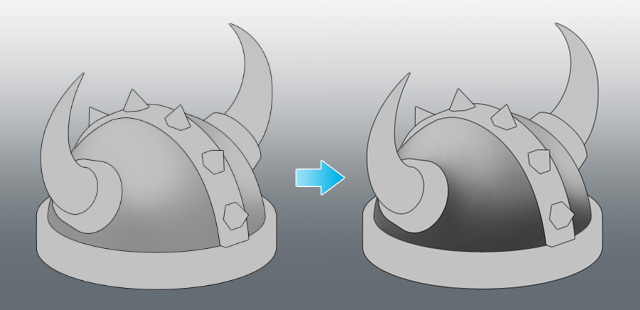
With those finished, we then add highlights and some sharper shadows created by light sources, and we can move onto the next office.
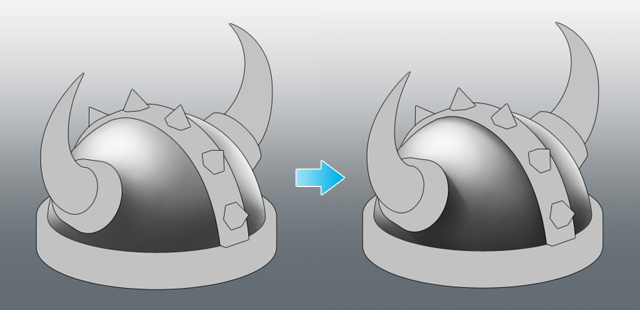
Adjacent, let's paint the places around the base of the horns and the rim of the helmet where the cylinder painting method can exist practical. As before, continue in mind where the light sources are while painting. However, thinking about it too much can cause unbalanced light and shadow, which lowers the epitome's iii-dimensional advent, then only loosely continue it in listen when thinking about how the shadows and highlights are bandage.
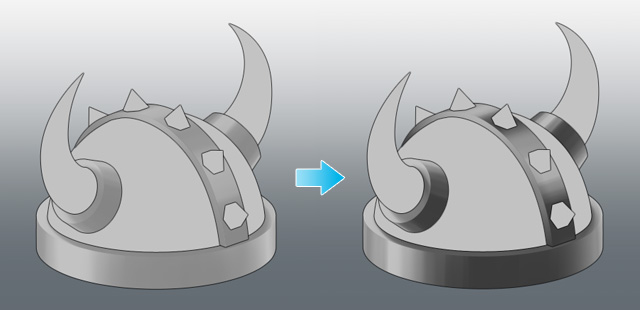
Add highlights after finishing the shadows. For these parts, they will await meliorate with a sharp, articulate contrast between light and shadow.
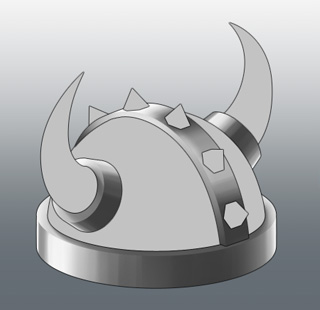
Permit'southward motility onto the horns. Despite the bend, they can likewise be painted using the cylinder method.
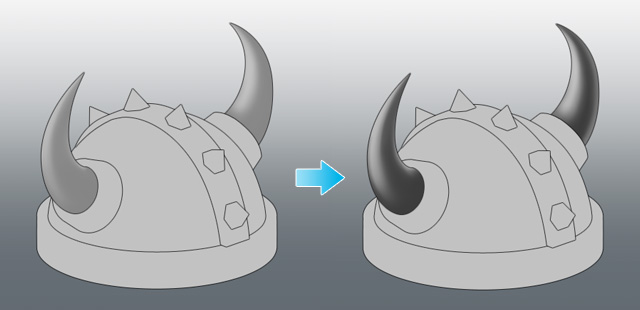
There are some challenging areas to create shadow equally the shape is curved and tapered, but once they are finished, the highlights are and so added, and the horns are now complete.
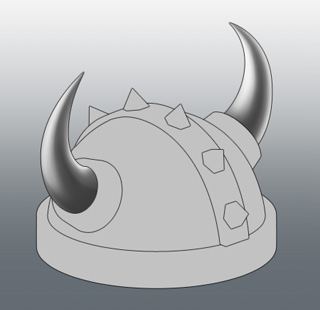
Finally, let's paint the spikes using the flat aeroplane painting method. Apply two separate planes of shadow that have a difference in contrast.
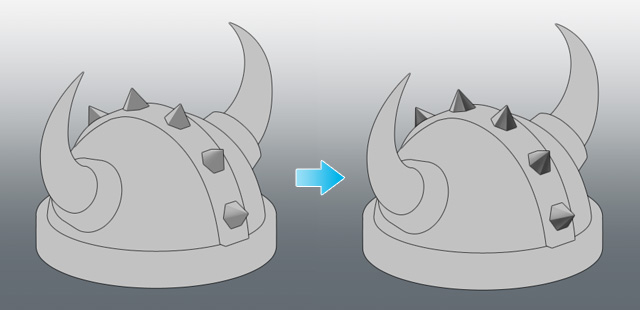
Then add highlights to consummate each spike.
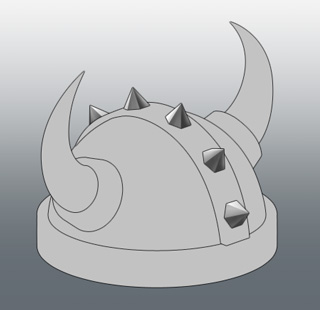
At present, expect at the image every bit a whole and make any adjustments needed. I felt that the spikes needed some more brightness, and then I added more highlights and shadows, as in the image below.
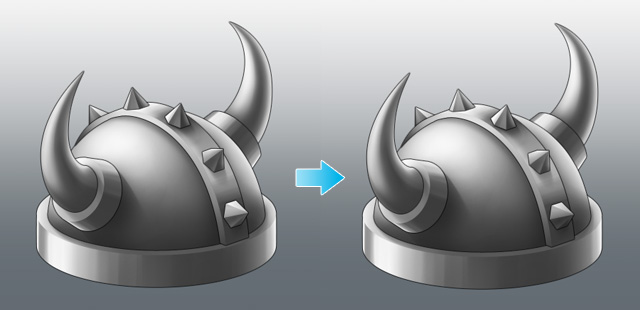
The helmet is at present complete.
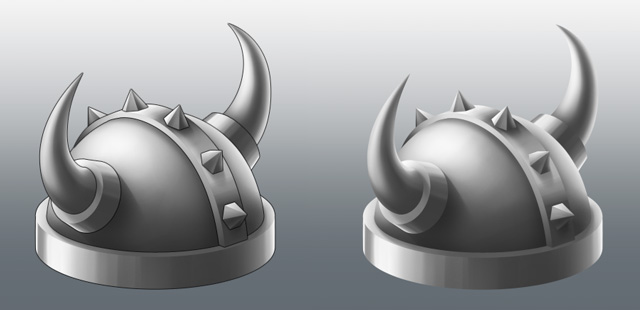
By the manner, y'all tin remove the line-work, and your image volition look similar the prototype below. I think that beginners volition want to focus on the line drawing, but I recommend removing them because illustrations without lines assist make the paradigm feel even more 3-dimensional.
Bonus: Modify your metallic type with a slope map!
Finally, as a footling actress, I desire to talk nigh a role called a gradient map that can be used in both Photoshop and Clip Studio Paint. This function allows you to hands create gold, silver, and bronze medallions from a black and white illustration.
What is a slope map?
A slope map is a special kind of layer thatassigns a colour according to brightness.
From here, I will explain the process of using a gradient map using Photoshop. Let'south start with a simple example. Create a new canvas in Photoshop and make full it with a blackness and white slope.

Adjacent, we'll create a gradient map. SelectLayer carte du jour>New Correction Layer >Gradient Map to create a slope map layer.
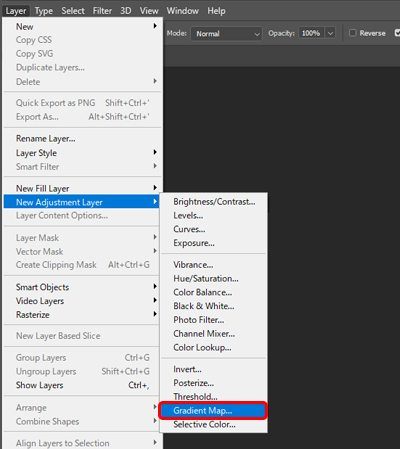
The layer comes with an attached mask that hides half the layer, which shows us how the effect works.
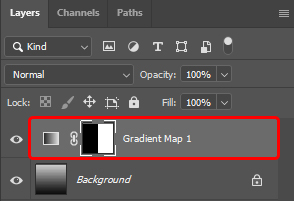
Nosotros will set the gradation map from theAttributes panel. Select the slope map layer and click the gradient displayed in theAttributes panel to bear witness theGradient editor.
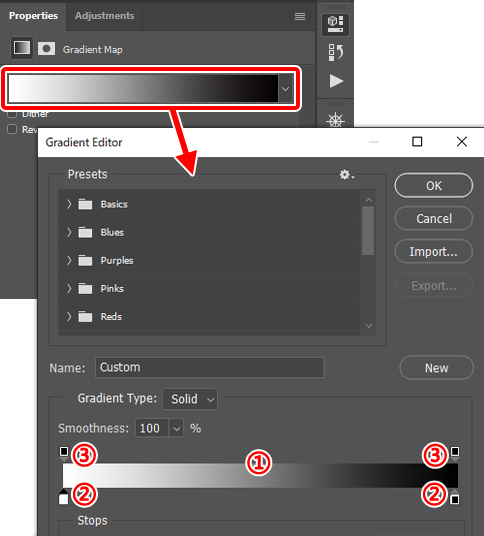
In the Gradient Editor is the color bar (i) containing the colors of the set slope. (2) contains nodes that set the gradient color, and (3) includes nodes that fix the opacity of the colour. Click one of the nodes in (2) and click (4) [Color] to display the Color Picker, where yous can select the color to set for the node.
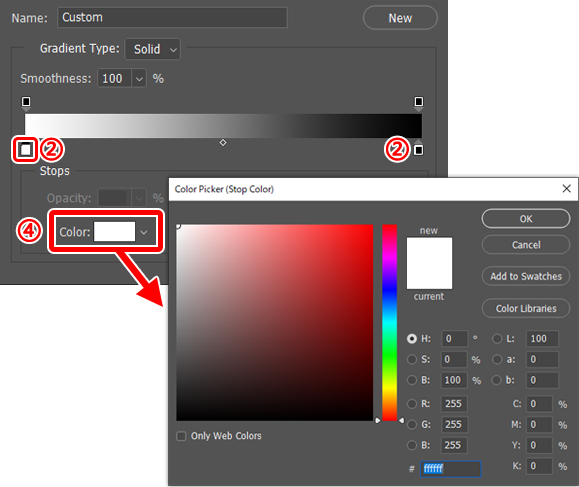
For now, let'south set the left node (2) to red and the right (two) node to blueish. You tin see in the prototype below that this changes each part of the gradient on the canvas to the corresponding colors.
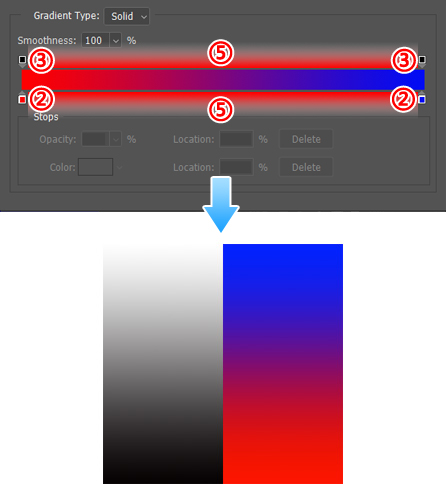
As you may accept noticed with the gradient settings, the left-paw color (reddish) is replacing the nighttime colors, and the correct-hand colour (blue) is replacing the light colors. The (2) and (3) nodes can exist added by clicking on the surface area of (5) and can exist moved by dragging. You lot can also erase the node by dragging it outside the (5) area. For example, y'all can change the prototype by adding another node on (2) and setting its colour to dark-green.
Past changing the colour of the lighter part of the gradation to green, the low-cal gray part of the blackness and white image has now as well changed.
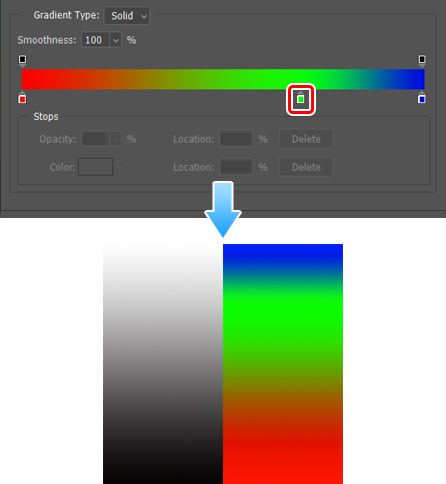
Changing the color of the medallions
Now, let's modify the black and white medallions to aureate and silver bronze using a gradation map. First, prepare a medallion drawn in black and white.

From here, we will use the gradient map. Create a gradient map layer and clip it to the binder that contains all the layers of the medallions.
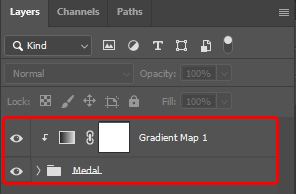
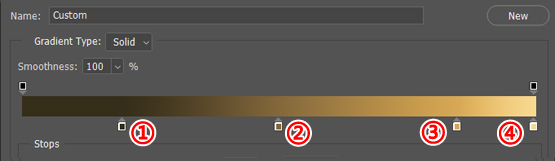
After that, ready the gradient colors and create gold, silver, and copper colors. The gradient for each color was created with the settings shown below. Depending on the blackness and white of the medallions and the exact positions of the node, gradient results may vary just, the below image is however a expert reference guide for the colors.
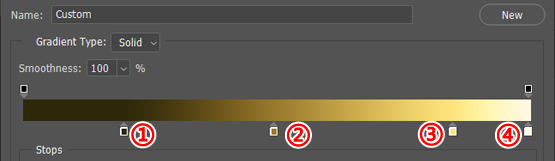
Gold gradient
(1) R:51 G:42 B:17 / position: twenty%
(2) R:153 G:126 B:50 / position: fifty%
(3) R:255 Chiliad:230 B:130 / position: 85%
(four) R:255 G:249 B:227 / position 100%
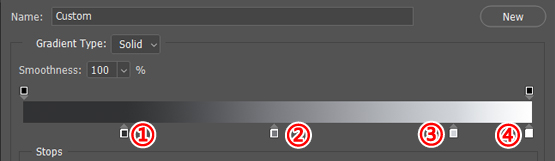
Silvery gradient
(one) R:48 Grand:49 B:51 / position: 20%
(two) R:121 G:124 B:128 / position: 50%
(three) R:210 G:213 B:217 / position: 85%
(4) R:255 G:255 B255 / position: 100%
Copper gradient
(one) R:51 G:40 B:xx / position: xx%
(2) R:128 K:99 B:51 / position: 50%
(3) R:217 G:169 B:87 / position: 85%
(4) R:255 G:218 B:153 / position: 100%
The result of applying this gradation map setting to each of the three blackness and white medallions is equally shown below. This immune us to change the color of the medallions to gilt, silver, and bronze medallions without repainting.

The colour settings of the gradient map tin can also be used every bit normal gradients. Saving your favorite gradient settings may make the slope map fifty-fifty more than useful. As well, many slope color palettes are published equally costless materials. Yet, their usage may differ, so be sure to bank check any information posted forth with them.
Author & Artist: Sugiyama Yuzuki (すぎやま ゆずき) Freelance Illustrator
I mainly create objects and items for smartphone games, such as buildings. I also create manga and games as a office of the fanzine group "orangish daughter."
Twitter: twitter.com/yuzuki

Source: https://www.clipstudio.net/how-to-draw/archives/159970
Posted by: oconnellfrawing1956.blogspot.com
0 Response to "How To Draw Details On Round Surfaces"
Post a Comment